
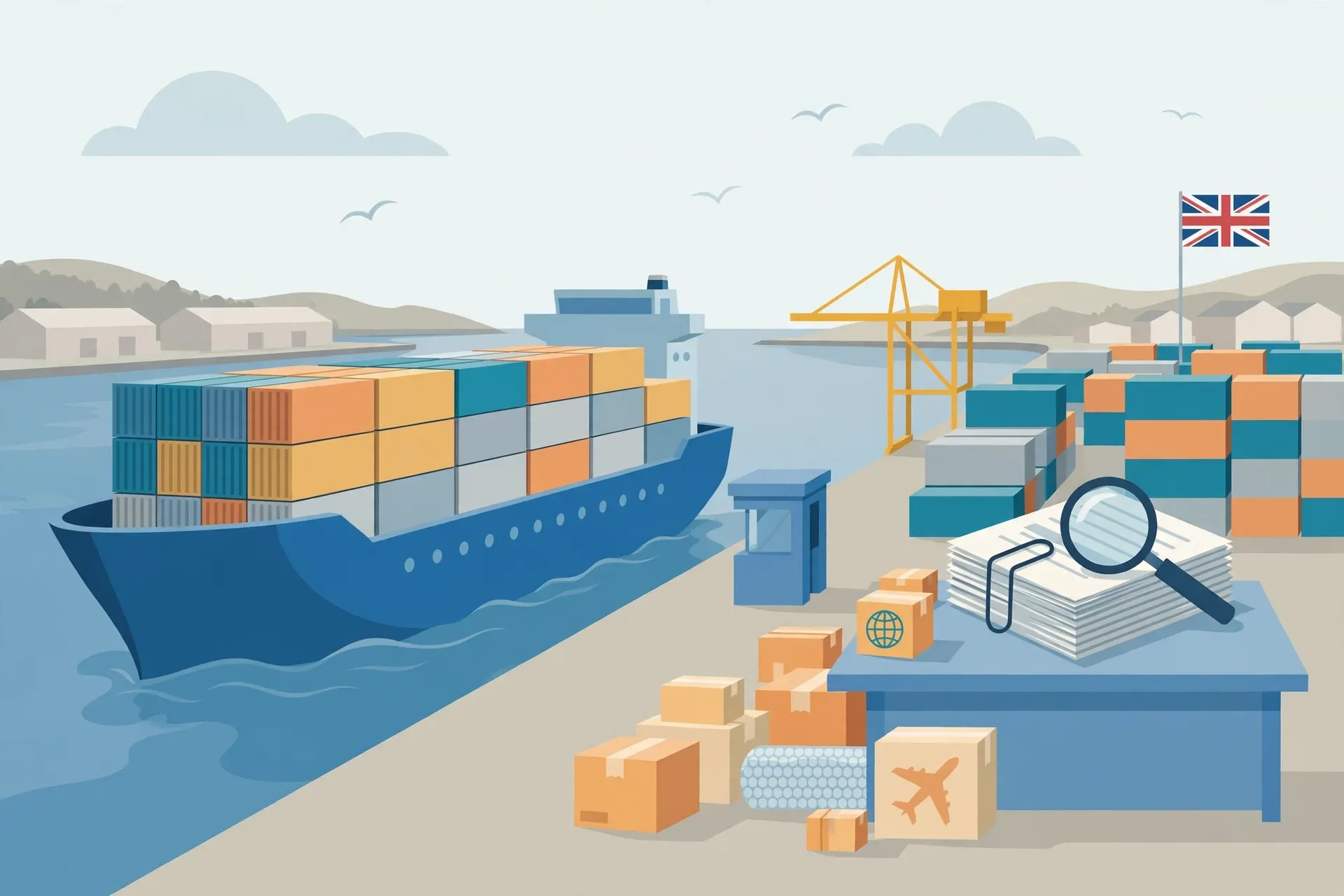
What customs clearance actually involves
When goods arrive at a UK port or airport, HMRC needs to know what they are, what they are worth, where they came from and who is importing them. A customs declaration answers all of that, and duty and VAT are calculated from it. Once the declaration is accepted and any charges are paid or deferred, the goods are released.
Most brands use a customs broker or freight forwarder to file declarations. You can file yourself, but the learning curve is steep and mistakes are expensive. A good broker earns their fee many times over in avoided delays.
The paperwork you need before anything ships
Customs problems almost always start with missing paperwork, and most of it needs to be in place before the goods leave the supplier:
EORI number: your Economic Operators Registration and Identification number. You cannot import commercially without one, and it is free to get from HMRC. Apply early, as it can take a few days.
Commodity codes: the ten-digit codes that classify your goods. The code determines your duty rate, so getting it wrong means overpaying or, worse, underpaying and facing penalties.
Commercial invoice: must show an accurate description, quantities, values and Incoterms. Vague descriptions are the single most common cause of customs holds.
Packing list: weights, dimensions and carton counts, matching the invoice.
Origin evidence: where the goods were made, which can affect duty under trade agreements.
Keep a file per shipment with all of the above. When HMRC queries a consignment, and occasionally they will, having everything to hand turns a week-long delay into a same-day answer.
Duties and VAT: what you will actually pay
Import duty is charged as a percentage of the customs value, which is generally the price you paid plus shipping and insurance to the UK border. Rates vary by commodity code, from zero on many goods to 12 percent or more on clothing and footwear. Check the UK Global Tariff for your codes before you commit to a landed cost.
Import VAT is charged at 20 percent on most goods, calculated on the customs value plus duty. The good news is that VAT-registered businesses can usually reclaim it, and postponed VAT accounting lets you declare it on your VAT return instead of paying it at the border, which helps cash flow enormously. If your accountant has not set this up for you, ask them about it.
Common clearance delays and how to avoid them
The same handful of problems cause most delays. Incorrect or missing EORI numbers stop declarations from being filed at all. Undervalued invoices trigger HMRC scrutiny and can lead to penalties. Missing safety documentation, such as UKCA marking evidence for regulated products, holds goods until it is produced. And wood packaging from some countries needs heat treatment certificates.
The pattern is clear: nearly every delay is a paperwork problem, not a customs problem. A pre-shipment checklist, run before the container leaves the factory, prevents the vast majority of holds.
Incoterms: know who handles what
Your Incoterms decide where the supplier's responsibility ends and yours begins. Under EXW, you handle everything from the factory gate. Under FOB, the supplier gets goods onto the ship and you take it from there. Under DDP, the supplier delivers cleared and duty-paid to your door.
For most eCommerce importers, FOB or CIF with your own forwarder and broker gives the best balance of cost and control. DDP looks simple but hides the duty and VAT in the price, which makes reclaiming VAT harder and removes your visibility of the true landed cost.
Why brands pair clearance with fulfilment
There is a strong logic to having your customs broker and your fulfilment centre work as one. When clearance is handled alongside receiving, containers move from port to warehouse racking without sitting in expensive port storage. Inspection happens on arrival, quantities are checked against the packing list, and discrepancies are raised while the forwarder is still engaged.
This is exactly how integrated 3PLs operate: international logistics, customs clearance, shipment receiving and storage under one roof. One point of contact, one timeline, and no finger-pointing between a broker, a haulier and a warehouse.
The bottom line
Customs clearance rewards preparation and punishes guesswork. Get your EORI, classify your goods correctly, keep your paperwork tight and use postponed VAT accounting, and your stock will flow. Treat it as an afterthought and the port will teach you the lesson at demurrage rates.
If you want imports handled end to end, from freight and clearance to warehouse receiving, try the pricing estimator at storageandlogistic.com or call 07380 636829 to discuss your import volumes.
Related reading
A better fit for your business
Looking for better fulfilment pricing?
Answer four quick questions and request a quote tailored to your orders, products and delivery needs.