
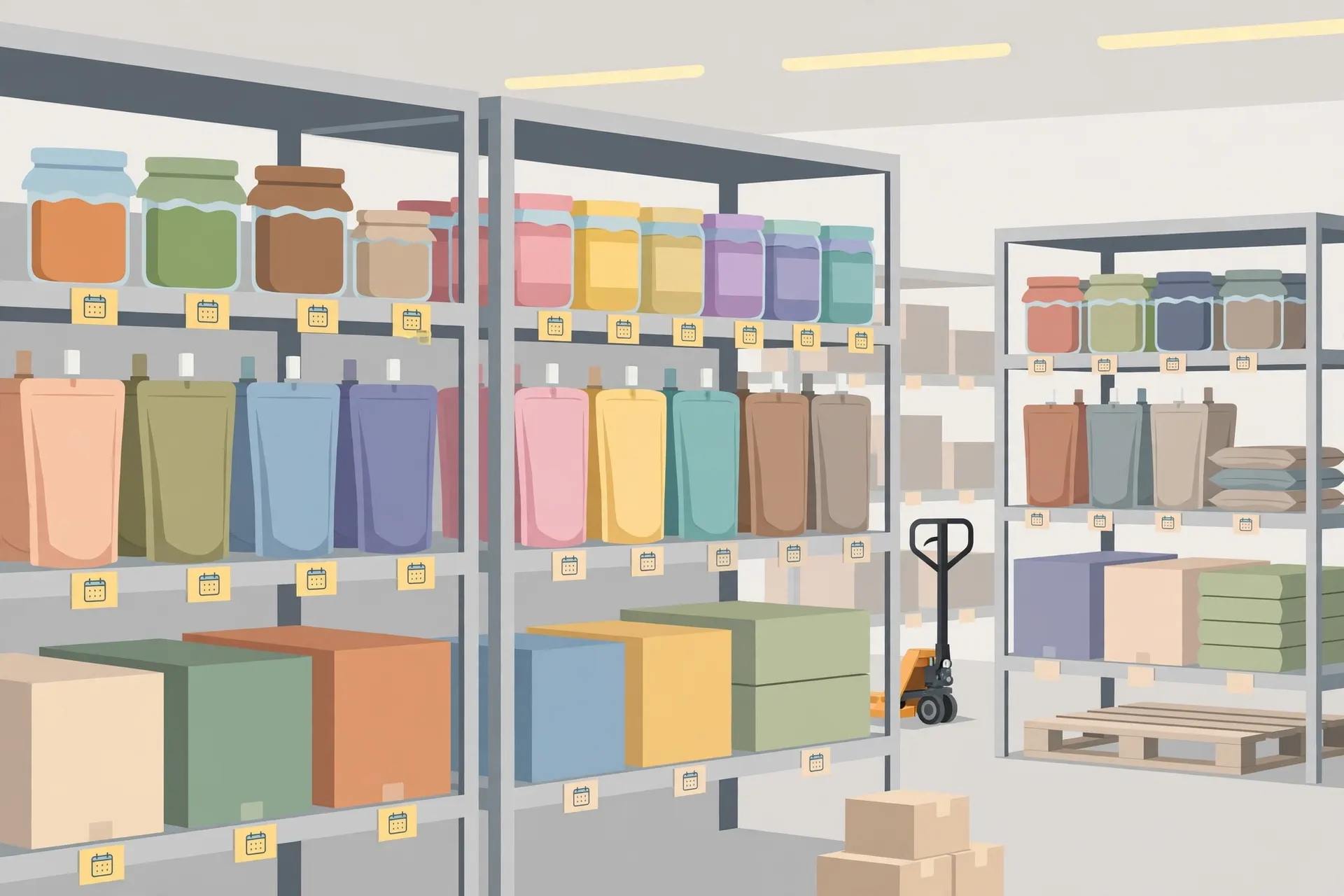
Food and drink is one of the fastest-growing corners of UK eCommerce, from protein snacks and artisan coffee to craft condiments and healthy treats. But food fulfilment in the UK is a specialist job. Shelf life, batch control, hygiene and presentation all matter, and a generic warehouse will get at least one of them wrong.
If you sell ambient food and drink products online, here is what good fulfilment looks like and what to demand from your 3PL.
Why food is a specialist fulfilment category
Food is the only eCommerce category where the product can become unsellable while sitting in storage. Every SKU has a shelf life, many have allergen implications, and customers notice freshness. A fulfilment partner that treats your granola bars like phone cases will cost you in expired stock and failed deliveries.
The fundamentals are straightforward: clean, dry, organised storage; strict batch and date control; careful picking that protects packaging; and fast dispatch that gets products to customers with maximum shelf life remaining. Simple to describe, demanding to execute.
Storage: clean, dry and organised
Ambient food storage has specific requirements. Warehouses must be clean and pest-controlled, with stock kept off the floor on racking or pallets. Temperature should be stable, because heat degrades quality even in shelf-stable products like chocolate and oils.
Organisation matters as much as cleanliness. Food SKUs need clear segregation from non-food goods, and allergen-containing products should be stored with cross-contamination in mind. Pallet storage works well for bulk ingredients and case stock, while shelf and bin locations suit individual retail units. Flexible storage with no minimums means you pay for the space your stock actually occupies, not a fixed footprint.
Batch and date control
This is the non-negotiable part of food fulfilment. Every inbound delivery must be recorded with:
Batch or lot codes from the manufacturer
Best-before or use-by dates per batch
Quantity received against the purchase order
Condition on arrival, including any damage
Picking must follow first-expiry-first-out, always. Shipping a fresher batch while an older one expires on the shelf is pure waste, and it is entirely preventable with disciplined receiving and inventory management. Your 3PL should also flag stock approaching expiry so you can run promotions instead of writing it off.
Picking fragile and heavy items
Food packaging is designed for shelves, not for courier networks. Glass jars, bottles and pouches need protective packing, and heavy items like multi-packs need boxes that can take the weight without splitting. Pick and pack for food should include right-sized outer packaging, cushioning where needed, and upright orientation for anything that can leak.
Presentation counts too. Food brands live on subscription boxes and gift sets, which means kitting: assembling multi-product boxes to a specification, adding inserts and finishing to retail standard. A 3PL with proper kitting capability handles your Christmas hampers and discovery boxes without breaking a sweat.
Dispatch speed and presentation
Freshness is a selling point, so dispatch speed matters. Same-day dispatch means products spend less time in transit and more of their shelf life with the customer. For food, that is not just service, it is quality.
Carrier choice matters as well. Reliable next-day and 48-hour services from carriers like DHL, Evri and Royal Mail keep delivery promises tight. Real-time tracking lets your customers follow their order and lets you spot delivery problems before the customer does.
Scaling from market stall to national brand
Most food brands start small: a market stall, a Shopify store, a few hundred orders a month. The fulfilment trap is signing a fixed warehouse lease too early, then paying for empty space while you grow into it.
The smarter path is pay-as-you-go fulfilment with no fixed contracts. Start with the storage and picking you need today, scale up for Christmas and summer peaks, and never pay for capacity you are not using. Your fulfilment should flex with your growth curve, not dictate it.
One honest note: know your product's storage needs. Ambient food and drink, which covers most eCommerce food brands, thrives in a well-run general fulfilment warehouse. If your products need chilled or frozen storage, say so upfront and choose a specialist. Matching your product to the right facility is the single most important fulfilment decision a food brand makes.
The bottom line
Food customers buy on taste and trust, and both depend on fulfilment. Clean storage, strict date control, careful packing and fast dispatch are the foundations. Get them right and your operations disappear into the background, which is exactly where they belong, leaving you free to focus on product and growth.
Want to see what food fulfilment costs at your volume? Try the pricing estimator for an instant per-order estimate, or call 07380 636829 to discuss your products and shelf-life requirements.
Related reading
A better fit for your business
Looking for better fulfilment pricing?
Answer four quick questions and request a quote tailored to your orders, products and delivery needs.