
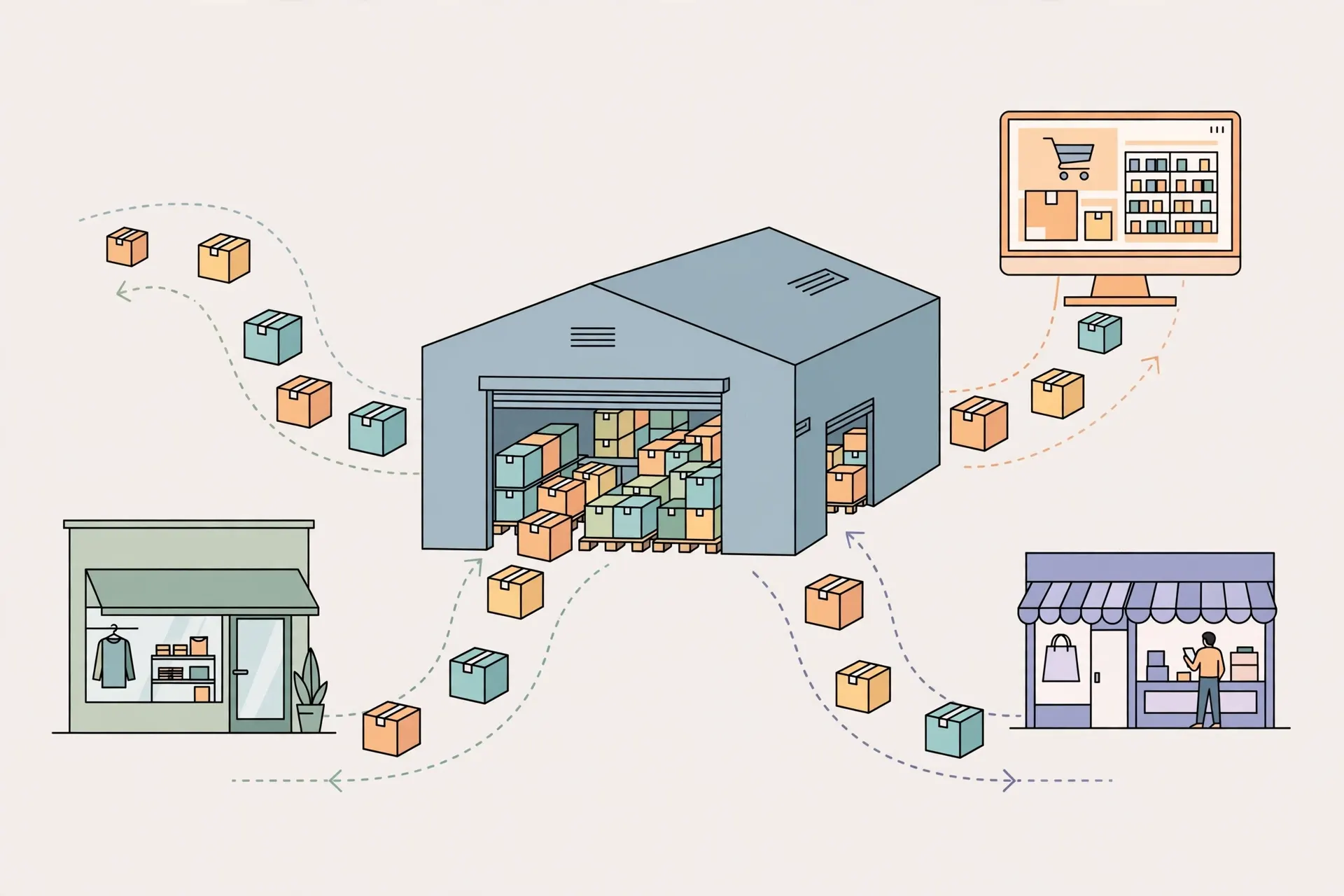
One stock pool, every channel
Most sellers start on one marketplace, then expand. eBay for the auction crowd, Amazon for the Prime buyers, maybe a Shopify store on the side. Sales go up, but so does the chaos. Multichannel fulfilment UK services solve the core problem: instead of splitting your stock between channels and hoping the numbers line up, you hold everything in one warehouse and let software route each order to the right packing bench.
Done well, your customer never knows or cares which channel they bought through. The parcel just arrives fast, correct and well packed.
The multichannel inventory problem
The single biggest risk of selling on multiple marketplaces is overselling. You have ten units left. eBay sells four, Amazon sells seven, and suddenly you have cancelled orders, angry messages and defects on your seller accounts. Manual stock updates cannot keep up with real-time sales.
A multichannel fulfilment setup fixes this with a shared inventory pool. Every sale on any channel deducts from the same live stock figure, which syncs back to each marketplace within minutes. Set safety buffers per channel if you like, ring-fence stock for a promotion, or let it all flow from one pool. Either way, overselling stops being a daily fear.
How multichannel order fulfilment works in practice
The workflow is straightforward once it is set up:
Connect your channels. Your eBay, Amazon and webstore accounts link to the fulfilment system, usually through direct integrations.
Send in your stock. One inbound shipment covers all channels. The warehouse receives, counts and books it into shared storage.
Orders flow automatically. Each sale appears in the warehouse system with its channel rules attached: which courier service, what paperwork, any channel-specific packing requirements.
Pick, pack, dispatch. Orders are picked from the shared pool, packed to spec, and collected by the right carrier.
Tracking syncs back. Tracking numbers push back to eBay and Amazon automatically, protecting your dispatch metrics and seller ratings.
eBay and Amazon have different rules
This is where experience matters. Amazon FBA sellers need prep to Amazon's labelling and packaging standards before stock goes in. eBay sellers live and die by dispatch times and tracking upload, which feed directly into seller level calculations. A fulfilment partner handling both needs to know both rulebooks: FNSKU labelling and carton requirements on the Amazon side, same-day dispatch discipline and tracking compliance on the eBay side.
Returns differ too. Amazon has its own returns flow, while eBay returns come back to you. A good partner inspects every return, re-grades the stock and puts sellable units straight back into the shared pool so they are available on all channels again.
Peak season and promotions across channels
Black Friday, Christmas and marketplace sale events hit every channel at once, and this is where a unified operation earns its keep. Instead of firefighting stock splits across eBay, Amazon and your webstore, you plan one inbound delivery of seasonal stock, set channel-level safety buffers, and let the warehouse handle the surge. Promotions need coordination too: a lightning deal on Amazon and a promoted listing push on eBay in the same week can double your daily volume overnight. A fulfilment partner used to these peaks will ask about your promotional calendar in advance, book extra packing labour, and agree extended courier collections so cut-off times hold even on your busiest days. Sellers who plan peaks with their 3PL in October ship calmly through December. Those who do not spend January answering where-is-my-order messages.
What multichannel fulfilment costs
Pricing follows the same logic as single-channel 3PL work: a per-order pick and pack fee, storage for the space you use, and courier charges. The efficiency gain is that you pay for one warehouse operation instead of running separate processes per channel, and you stop paying the hidden costs of oversells, split shipments and manual stock juggling.
Watch for providers who charge per-channel fees on top of everything else. Your channels are your business; the fulfilment should flex around them without penalty.
Choosing a multichannel 3PL
Ask these questions before you commit:
Which marketplaces do you integrate with directly, and how fast does stock sync?
Can you handle Amazon FBA prep as well as direct-to-customer marketplace orders?
What are your dispatch cut-off times, and do you offer same-day dispatch?
How do you handle returns from each channel?
Is pricing per order transparent, with no fixed contracts or minimum volumes?
A warehouse visit is worth the trip. Ask to see how marketplace orders are separated and checked, and how returns are processed. The answers reveal whether multichannel is their core business or an afterthought.
Selling on more channels should mean more revenue, not more admin. Run your volumes through the pricing estimator at storageandlogistic.com to see what unified fulfilment costs, or call 07380 636829 to talk through your eBay and Amazon setup.
Related reading
A better fit for your business
Looking for better fulfilment pricing?
Answer four quick questions and request a quote tailored to your orders, products and delivery needs.